
Book Ethnoveterinary Medicine 2020
Going though old e-mails I encountered this book again, entitled Ethnoveterinary Medicine: Present and Future Concepts (Springer 2020) edited by Lindy McGaw and Muna Ali Abdalla from Pretoria University, South Africa. The link provides the entry to the whole book. The book can be ordered here
This important book contains three major parts, with a total of 17 case studies:
PART 1: Role of Natural Products and Remedies in Treating Animal Diseases
PART 2: Sociological Aspects and Considerations Relating to Documentation of Ethnoveterinary Medicine
PART 3: Ethnoveterinary Medicine Around the World
Each of the case studies presented in this book contains important insights and practices from different parts of the world. As you may know, Ethnoveterinary Medicine is one of the main topics that Natural Livestock Farming 5-layer strategy builds on. Highly recommended!
CONTENT
1 Introduction . . . . . . . . . . . . . . . . . . . . . . . . . . . . . . . . . . . . . . . . . . . . . . . 1
Muna Ali Abdalla and Lyndy J. McGaw
Part I The Role of Natural Products and Remedies in Treating Animal
Diseases
2 The Pharmacological and Nutritional Significance of Plant-Derived
Natural Products: An Alternative for Animal Health . . . . . . . . . . . . . 7
Muna Ali Abdalla and Lyndy J. McGaw
3 Alternative Antimicrobials: Medicinal Plants and
Their Influences on Animal Infectious Diseases . . . . . . . . . . . . . . . . . . 23
Shanoo Suroowan and M. Fawzi Mahomoodally
4 Ethnoremedies Used for Horses in British Columbia
and Trinidad and Tobago . . . . . . . . . . . . . . . . . . . . . . . . . . . . . . . . . . . . 57
Cheryl Lans, Candice Sant, and Karla Georges
5 Plants for Controlling Parasites in Goats . . . . . . . . . . . . . . . . . . . . . . . 73
Irene R. Mazhangara, Marcia Sanhokwe, Eliton Chivandi,
John F. Mupangwa, José M. Lorenzo, and Voster Muchenje
6 Ethnoveterinary Practices for Control of Ticks in Africa . . . . . . . . . . 99
Felix Nchu, Paulin Nana, George Msalya, and Solomon R. Magano
Part II Sociological Aspects and Considerations Relating
to Documentation of Ethnoveterinary Medicine
7 Gender Aspects and Multiple Contexts in Ethnoveterinary
Practice and Science . . . . . . . . . . . . . . . . . . . . . . . . . . . . . . . . . . . . . . . . 125
Tedje van Asseldonk and Cheryl Lans
viii
8 Toward a Better Understanding of African Ethnoveterinary
Medicine and Husbandry . . . . . . . . . . . . . . . . . . . . . . . . . . . . . . . . . . . . 151
Alberto Zorloni
Part III Ethnoveterinary Medicine Around the World
9 Ethnoveterinary Medicine and Medicinal Plants Used
in the Treatment of Livestock Diseases in Cameroon . . . . . . . . . . . . . 175
Jean Paul Dzoyem, Roland T. Tchuenteu, Kofia Mbarawa,
Awung Keza, Akah Roland, Abdel Jelil Njouendou,
and Jules Clement N. Assob
10 Ethnoveterinary Medicinal Plants Used in South Africa . . . . . . . . . . 211
E. Thato Khunoana and Lyndy J. McGaw
11 Ethnoveterinary Plants and Practices for the Control of Ticks
and Tick-Borne Diseases in South Africa . . . . . . . . . . . . . . . . . . . . . . . 251
Olubukola T. Adenubi, Muna Ali Abdalla, and Lyndy J. McGaw
12 Ethnoveterinary Medicine: A Zimbabwean Perspective . . . . . . . . . . . 269
Prosper Jambwa and Emmanuel Tendai Nyahangare
13 Ethnoveterinary Practices in the Maghreb . . . . . . . . . . . . . . . . . . . . . 285
Irene Teixidor-Toneu, Abdeddaim Elhajjam, and Ugo D’Ambrosio
14 Natural Remedies for Animal Health in Latin America . . . . . . . . . . . 311
Anna Karolina Martins Borges, Raynner Rilke Duarte Barboza,
Wedson Medeiros Silva Souto, and Rômulo Romeu Nóbrega Alves
15 Local Practice of Cattle Farming and Ethnoveterinary
Medicine in Estonia: Case Study of Saaremaa and Muhumaa . . . . . 345
Raivo Kalle and Marko Kass
16 Belarusian Ethnoveterinary Medicine: Ritual Practices
and Traditional Remedies. . . . . . . . . . . . . . . . . . . . . . . . . . . . . . . . . . . . 375
Aliaksandra Shrubok
17 The Use of Plants for Animal Health Care in the Spanish
Inventory of Traditional Knowledge . . . . . . . . . . . . . . . . . . . . . . . . . . . 391
José Antonio González, Alonso Verde,
and Manuel Pardo-de-Santayana
129 Different pesticides found on Dutch dairy farms
Dutch dairy farms are often perceived as an example for the rest of the world, due to high productivity of milk per cow and per farm. What is less known, is that Dutch dairy farming is going though a severe crisis, especially due to environmental degradation.
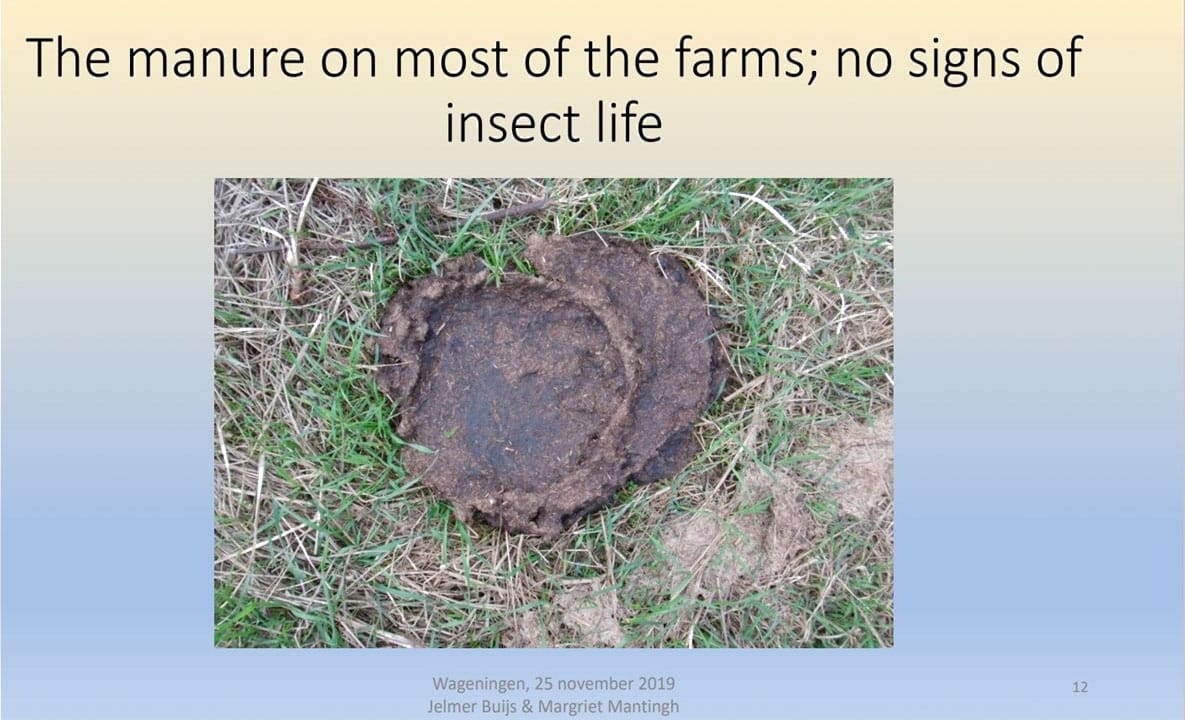
In a 2019 a study by Pesticide Action Network Netherlands (PAN-NL) on pesticides in dairy analysed soil, fodder, concentrated feed and manure on presence of pesticides in 23 dairy farms. A total of 129 different pesticides (including biocides and metabolites) were detected on the 16 conventional farms, and 69 on the 8 organic farms. This shows the high presence of pesticides in the environment, used for example for controling flies and other ectoparasites on dairy cattle. Amongst other factors this, may explain why the population of meadow birds has been reduced over 75% in recent decades. The presence on organic dairy farms may be explained from the use of long-lasting pesticides in the past. A PP version of the study can be found here

Succesful IDF-NLF webinar Herbs for Mastitis Control

On December 6 the International Dairy Federation (IDF) organized a succesful webinar together with NLF entitled Use of Herbs for Mastitis Control. Mastitis is the no 1 disease in dairy farming, for which most antibiotics are used for prevention and cure. Here you can find the PP's presented:
- Dr. Jorge Pinto Ferreira, Food Safety Officer FAO Rome: Relevance of Mastitis Control_to Contain AMR
- Dr Katrien van't Hooft, Natural Livestock Farming Foundation: Natural Livestock Farming: Integrated Cattle Health Approach for Smallholder and Large Scale Dairy
- Dr M.N.B.Nair, Trans Disciplinary University (TDU): Transdisciplinary Validation of Ethno- Veterinary Formulation for Mastitis
- Dr. A.V.Harikumar, Deputy General Manager Animal Health, National Dairy Development Board (NDDB): Experiences and Results of Herbal Mastitis Control in Indian Smallholder Dairy
- Dr Maria Groot, Researcher Wageningen Food Safety Research (WFSR): Reducing the Use of Antibiotics and Safety of Herbal Products in Dutch Dairy Farming
Reviving lost Wisdom: New publications on Ethnovet Medicine
During this World Antibiotics Awareness Week the Centre for Science and Environment (CSE) in India organised a webinar Ethno Veterinary Medicine – an alternative to antibiotics in the dairy sector. It included participation of different partners within NLF, as well as National Dairy Development Board (NDDB), FAO and International Dairy Federation (IDF).
This event comes together with two new publications on EVP:
- CSE story on Ethnoveterinary medicines – Down to Earth Dec2022 entitled: Easy to Switch: Ethno Veterinary Medicine as a low-cost alternative to reduce antibiotic use in the Indian dairy sector (Deepak Bhati et al)
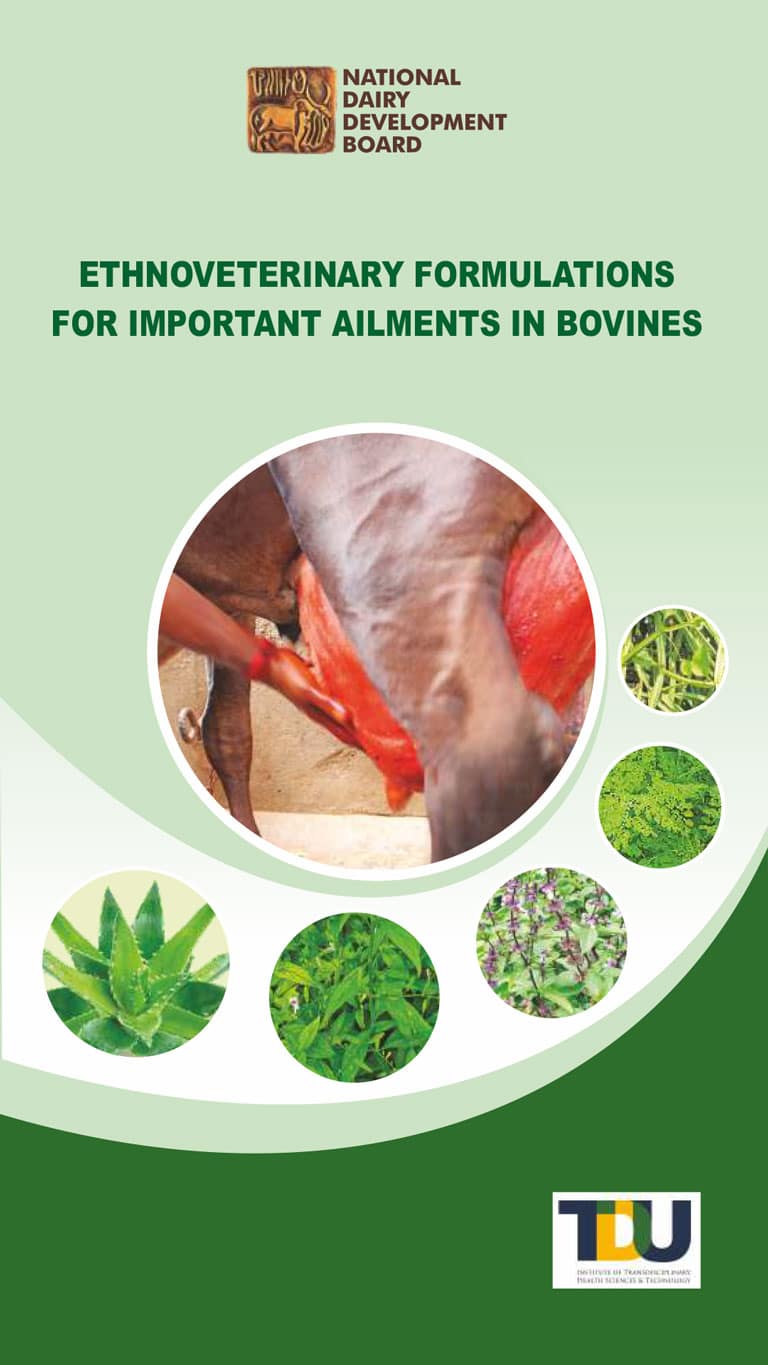
- NDDB updated EVM_Brochure Nov2022 Beautifully illustrated brochure elaborated by Trans Disciplinary University (TDU) with latest info on herbal treatment for the 20 most common dairy cattle diseases. On each of the pages you can scan the QR code for the video showing the preparation of the remedy.
Clean milk production: what can be learned from the Netherlands and India?
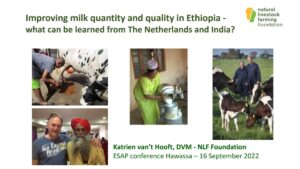
The Netherlands and India are both famous for milk production – both in very different ways. What can be learned from both countries? For an African country like Ethiopia?
A PP on this topic was presented and discussed on September 16 during the recent conference of the Ethiopian Society of Animal Production (ESAP). On basis of the PP from the Executive Director of Natural Livestock Farming Foundation, Katrien van’t Hooft, entitled: Improving Milk Quantity and Quality in Ethiopia – what can be learned from the Netherlands and India?
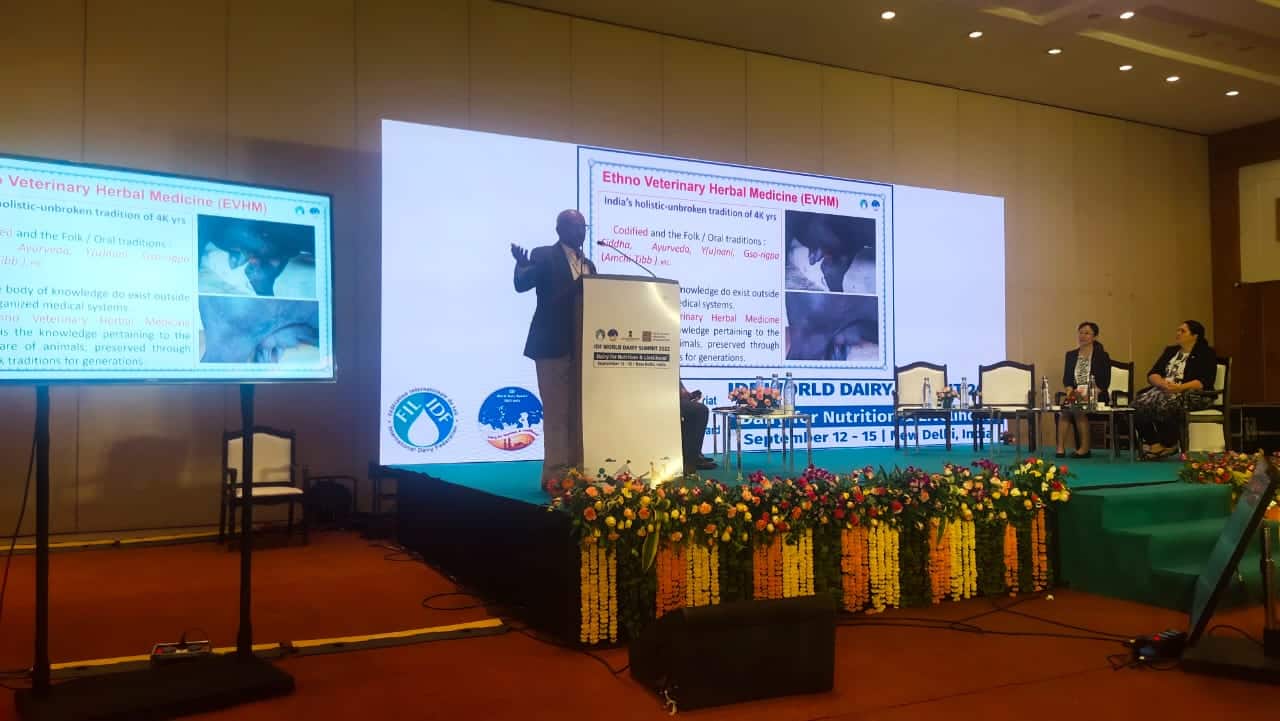
Ethno Veterinary herbal medicine presented at World Dairy Summit
On September 13 the outcomes of the work on ethnovet medicine in India was presented by Prof. Punniamurthy during the World Dairy Summit of the International Dairy Federation (IDF) in Delhi, India. It was presented during the FAO-IDF session Innovative Solutions to AMR management under the title: Ethno Veterinary herbal medicine for clean milk production. The cure rate of the verified ethnovet combinations was presented, including for mastitis (86%), diarrhea (88%), Foot & Mouth Disease (93%) and fever (85%).
It is clear that within the Indian dairy context ethnovet medicine, in combination with good animal management practices, is now becoming mainstream. We hope the rest of the world, especially low- and middle-income countries, wil follow the example!
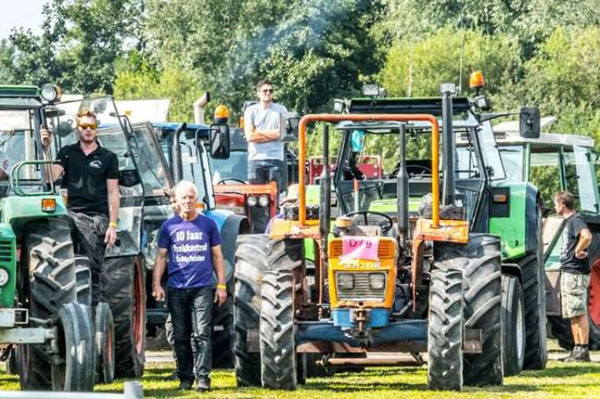
Dutch Farmers in Distress!
Today Dutch farmers are facing difficult times, because of government regulations planned related to reduce the excess of Nitrogen excretion of the sector. Due to the use of artifical fertilizer and concentrates in the process of scale enlargement and intensification, excess Nitrogen excretion has been an issue in Dutch farming, including the dairy sector, for the last 40 years. Though farmers have been able to reduce the excess Nitrogen excreted, the negative side effects on the natural environment, soil- and water quality have built up to unacceptable levels.

Want to know more? Please review this PP presentation Dutch farmers in distress – a case of exceeding environmental boundaries presented at the Asia meeting of the Global Agenda of Sustainable LIvestock (GASL), August 22nd – 2022
First NLF Webinar in Spanish
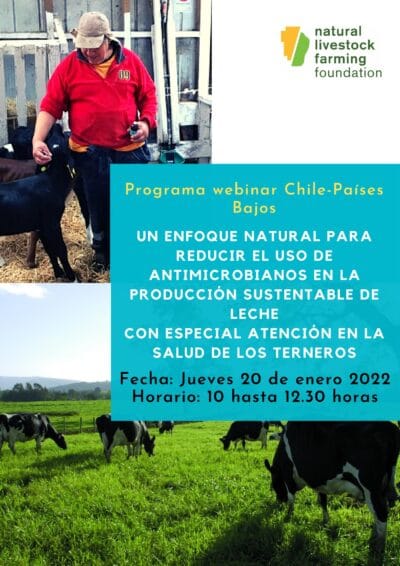
On Thursday January 20 the first NLF webinar in Spanish will be organized with interested parties in Chili, and contributions from both Chile and the Netherlands. Topic: Natural ways to reduce antibiotic use in dairy cattle, with emphasis on calf health.
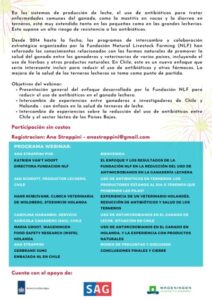
See invitation NLF webinar Chile-Holanda 20Enero2022
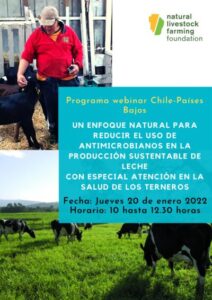
PLEASE NOTE THIS SESSION IS IN SPANISH ONLY
The webinar will be moderated by Ana Strappini, and will include the following speakers:
- Katrien van’t Hooft – NLF strategy to reduce the use of antibiotics in dairy farming
- Jan Schrott (Chilean dairy farmer) – Use of antibiotics in calf raising – how are Chilean farmers doing?
- Hans Nij Bijvank (Dutch vet ) – Experience of Dutch vet to reduce antibiotic use in dairy farming
- Carolina Marambio (Government Livestock Service, Chile) – Antibiotic use in dairy, the situation in Chile
- Maria Groot (Wageningen Food Safety Research) – Antibiotic use in livestock in the Netherlands, and the experience with natural products
The session counts with the suport of the Dutch embassy in Santiago Chile, and will be closed by Gerbrand Jung – the agricultural attache of the Dutch embassy.
Start of the session: 10 AM (time Chile), 2 PM (CET)
For registration, please contact mailto:anastrappini@gmail.com
NLF in global magazine on Antibiotic Reduction
NEW STRATEGY TO REDUCE ANTIBIOTICS IN DAIRY FARMING is our recent publication in the December MISSET special issue entitled Antibiotic Reduction – Embracing the Challenge. It is a general description of the objectives,activities and outcomes of the NLF work in both smallholder dairy farming (India, Ethiopia and Uganda), and large scale dairy farming in the Netherlands.
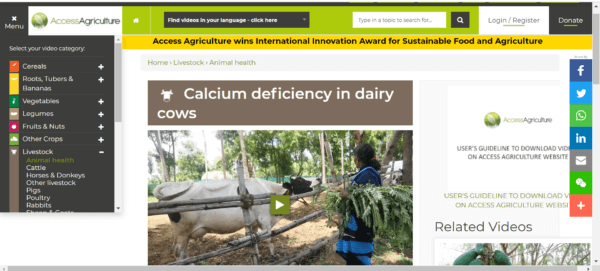
New video on Calcium Deficiency in Dairy Cows
The collaboration between NLF and Agro-Eco is bearing its first fruits, with a new video on Calcium Deficiency in Dairy Cows. It presents numerous practical possibilities of how to prevent ‘milk fever’ in dairy cows under smallholder conditions, taking Indian dairy farmers as an example.

Milk fever is one of the common cattle diseases amongst high producing cross-bred dairy cows, and can easily lead to the death of the cow. Meanwhile, it is not common amongst local breed cattle. Therefore the knowledge from this video is especially crucial for those smallholder farmers who are starting to produce milk with crossbred dairy cattle.